Home / Pug Care
Pug care guide

Loving a pug well.

Pugs are wonderful, funny, devoted little dogs – and they come with a few quirks of biology that every owner should understand. None of it is hard once you know it. Here’s what we teach every adopter.

If you read one thing, read about heat.

In Las Vegas, heatstroke is the most common way pugs come to serious harm – and it’s almost entirely preventable. Jump to keeping a pug cool.

Heat is the #1 danger in Las Vegas
Care · 01

Heat is the #1 danger in Las Vegas

Pugs are brachycephalic – short-nosed – so they cannot cool themselves by panting the way longer-nosed dogs can. In our summers, that is a matter of life and death.

  • Walk only at dawn or after dark, May through September. Test the pavement with your hand for 7 seconds first.
  • Never leave a pug in a car, even for a minute, even with the windows cracked.
  • Know the warning signs of heatstroke: heavy frantic panting, bright-red or bluish gums, drooling, wobbliness. Cool with room-temperature (not ice) water and go to a vet immediately.
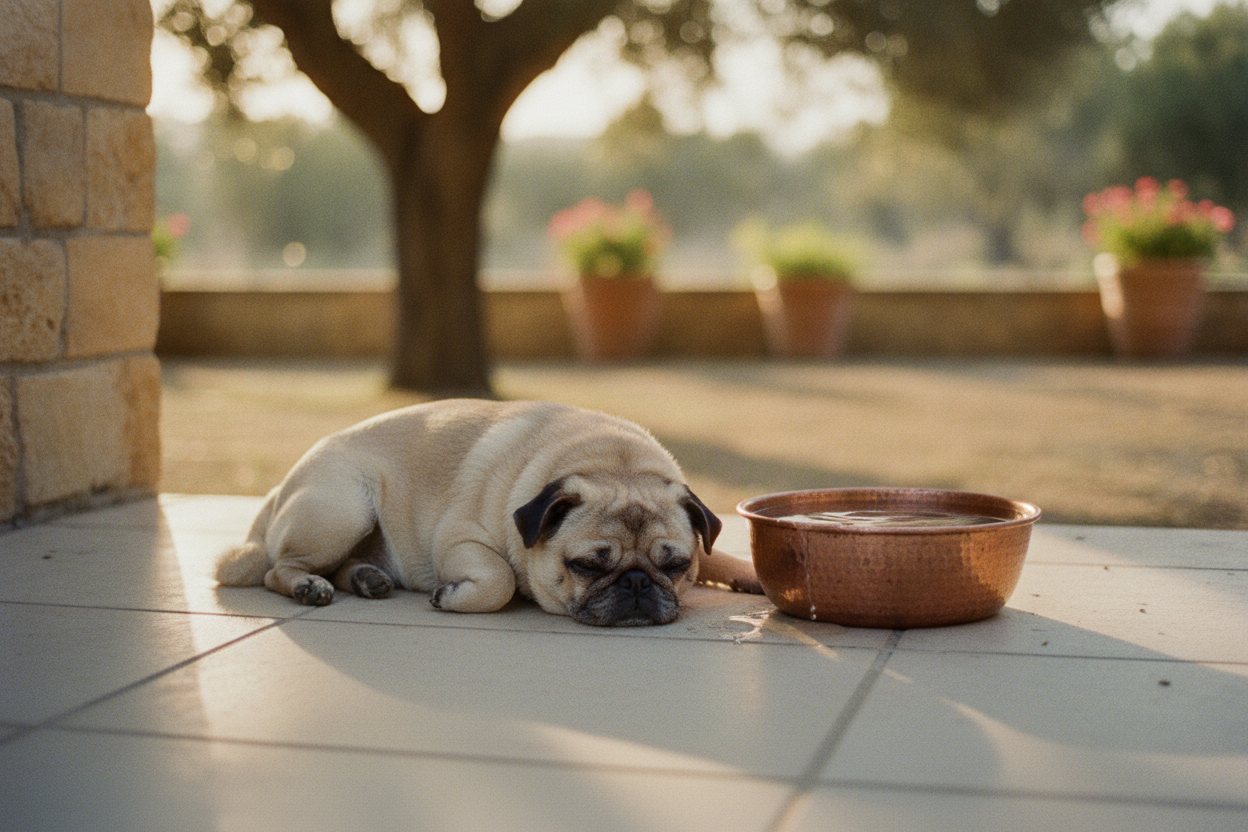
  • Keep fresh water everywhere and give them cool tile or a mat to flop on indoors.
Care · 02

Breathing & weight

That famous pug snort is part of the breed – but loud, labored, or collapsing breathing is not normal and deserves a vet visit.

  • Keep your pug lean. Even one extra pound crowds an already-narrow airway. You should be able to feel ribs easily.
  • Use a harness, never a collar, to keep pressure off the throat.
  • Ask your vet about BOAS (brachycephalic obstructive airway syndrome) – some pugs benefit from a minor surgery that makes breathing far easier.
Wrinkles, eyes & ears
Care · 03

Wrinkles, eyes & ears

Those adorable folds trap moisture and debris. A two-minute routine keeps skin and eyes healthy.

  • Wipe the nose-rope and facial folds a few times a week with a soft, damp cloth, then dry them completely.
  • Pugs have big, exposed eyes – rinse with a vet-approved saline if they look dusty, and see a vet fast for any squinting, cloudiness, or pawing.
  • Check ears weekly for redness or odor; clean only with a vet-recommended solution.
Care · 04

Food, exercise & enrichment

Pugs will convince you they are starving. They are lying. Measured meals and gentle activity keep them happy and long-lived.

  • Measure food and skip the table scraps – obesity is the most common pug health problem.
  • Short walks plus sniffy enrichment (snuffle mats, puzzle feeders) tire a pug more kindly than long runs.
  • Pugs are companion dogs to the core: they do best with people around and can struggle with long days alone.
Routine vet care
Care · 05

Routine vet care

A good relationship with a vet who knows flat-faced breeds is the single best thing you can do for a pug.

  • Annual wellness exams, dental care, and parasite prevention are the baseline.
  • Spay/neuter and microchipping – every pug we adopt out is already done.
  • Budget for the breed: pugs can need care for eyes, skin, and breathing over a lifetime. Pet insurance is worth a look while they are young.
A friendly disclaimer

We’re rescuers, not your vet.

This guide is general education from people who love pugs, not medical advice. Always partner with a veterinarian who knows flat-faced breeds for your own dog’s care – and if something seems wrong, especially breathing or overheating, treat it as urgent.

Snorts welcome

Ready to meet a pug?

Adopt, foster, volunteer, or just come say hi at our next pop-up petting zoo. However you start, it starts here.